

The Jake Paul Anthony Joshua storyline has shifted from rumour to global headline, with a YouTuber-turned-boxer stepping into a sanctioned heavyweight fight against a two-time unified world champion. It’s the kind of matchup boxing purists hoped would never make it past the rumour stage, yet here it is — signed, promoted, and set for a global broadcast.
Criticism has been swift. UFC president Dana White labelled the concept “a f***ing bad idea,” while former heavyweight champion David Haye went further, admitting he “genuinely fears for Jake Paul’s life.” The contrast couldn’t be clearer: Joshua represents legacy and pedigree, while Paul represents entertainment and commercial reach.
Together, they’ve created a collision point where competitive integrity is overshadowed by spectacle. This fight isn’t just controversial; many argue it crosses an ethical line that could alter the sport itself.
How We Got Here — The Collapse of Tradition and Rise of Spectacle
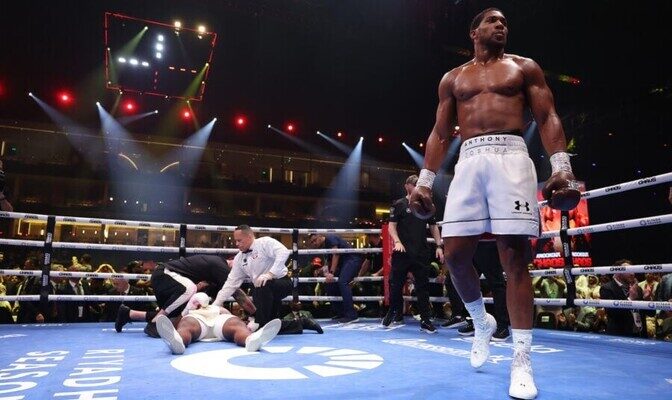
The boxing world hasn’t arrived at this point by accident. Over the last decade, social-media popularity has increasingly influenced matchmaking, with celebrity events outperforming some traditional cards in pay-per-view numbers. Jake Paul has been at the centre of this shift, leveraging digital fame into a boxing career built on spectacle and strategic matchmaking.
Paul’s progression has been unorthodox but commercially effective:
• early cruiserweight bouts
• influencer showdowns
• victories that trended more for their novelty than their technical merit
• a high-profile exhibition with Mike Tyson
• the now-abandoned Gervonta Davis exhibition framework
These weren’t steps toward fighting a legitimate heavyweight. Yet the path somehow led him there.
Joshua’s situation contributed to this improbable pairing. After elbow surgery, a KO loss to Daniel Dubois, and nearly a year out of competition, his career sat at a crossroads. With no immediate title path and fewer marquee opponents available, a spectacle fight offered financial stability and relevance.
This matchup didn’t evolve naturally. It emerged from intersecting needs — Paul’s pursuit of validation and Joshua’s search for a lucrative reset — producing a contest driven by opportunity rather than competitive logic.
Jake Paul Anthony Joshua — The Physical Reality Behind a Dangerous Mismatch

Weight, Power, and Conditioning
The physical disparity between the two is stark.
Anthony Joshua’s last three weigh-ins: 252 lbs, 252 lbs, 251 lbs.
Jake Paul’s last three: 199 lbs, 227 lbs (Tyson), 200 lbs.
The swing between Paul’s originally planned Gervonta Davis fight and Joshua is more than 100 lbs, highlighting the leap from spectacle boxing to real heavyweight danger. Joshua’s knockout power is proven at the elite level; Paul has never taken shots from someone of that size, pedigree, or precision.
Height, Reach, and Body Mechanics
Joshua stands 6’6″ with Olympic credentials and over a decade of elite experience. Paul, at 6’1″, lacks the foundational amateur background that prepares fighters for high-level pressure, timing, and combinations. Even with recent improvements, he remains untested against top-tier heavyweights.
Historical comparisons emphasise the problem. Fights with drastic size or experience gaps have often ended with early knockouts or injuries. Here, the mismatch is even more pronounced.
Expert Concerns and Risk Factors
Trainers and former champions have raised alarm for three key reasons:
• Punch resistance levels
• Defensive fundamentals
• High-intensity ring experience
David Haye compared the matchup to “a lion fighting a house cat,” while Derek Chisora publicly insisted Joshua must finish Paul within three rounds. That expectation alone reveals how lopsided the contest appears — and how dangerous it could become if extended.
The Ethical Meltdown : When Profit Overrides Fighter Safety – Jake Paul Anthony Joshua

Platforms and Promoters Driving the Momentum
With MVP Promotions, ESPN, and Netflix all involved in various stages of Paul’s crossover fights, the incentives are clear. The global audience for influencer boxing remains massive, and a heavyweight star like Joshua brings credibility — and risks.
Yet sanctioning bodies approving this matchup raises ethical concerns. Many insiders question how a novice heavyweight can leapfrog rankings and safety protocols to face a former unified champion on a major platform.
The Decline of Meritocracy
This trend has broader consequences. While real contenders grind for title shots, influencers jump the queue through fame, not performance. It impacts:
• public trust in rankings
• matchmaking fairness
• the development pathways for rising fighters
Growing frustration is evident across gyms, commentary desks, and online communities.
The “Spectacle Effect”
Despite concerns, fans continue tuning in — often driven by curiosity or morbid fascination. The “car crash effect” describes this dynamic well: viewers watch not for competitive balance, but for the chaos and unpredictability of crossover events.
The danger is what this does long term. If spectacle becomes the norm, boxing risks prioritising shock value over skill, tilting the sport toward a hybrid entertainment product that abandons its roots.
The Fans, Fighters, and Fallout : What Happens If Paul Survives? – Jake Paul Anthony Joshua

The Business Upside
In the best-case commercial scenario, the fight achieves massive global streams, proving the viability of influencer vs. elite matchups. That would open the door for more crossover bouts and further push boxing toward entertainment-first programming.
The Safety and Legacy Downside
The worst-case scenario is far more sobering. A severe injury would validate expert warnings and prompt renewed calls for regulatory reform. Even without injury, Joshua’s legacy could be damaged if he fails to dominate a much smaller, less experienced opponent.
The sport also risks losing credibility to rising alternatives such as MMA, bare-knuckle boxing, and influencer leagues, all of which face fewer ethical contradictions.
The Middle Ground
The most likely outcome is somewhere between disaster and triumph. Paul could lose decisively but remain physically intact, turning the fight into another viral moment. Yet each spectacle chips away at boxing’s heritage, shifting influence away from traditional fans and toward casual viewers who favour entertainment over authenticity.
Conclusion: A Fight That Reflects an Era of Change – Jake Paul Anthony Joshua
The Jake Paul Anthony Joshua fight highlights a turning point in boxing — one where commercial value increasingly outweighs competitive tradition. It reflects the sport’s shift toward hybrid entertainment, the risks of spectacle-driven matchmaking, and the tension between athlete safety and viewer demand.
Whether this matchup becomes a cautionary tale or a blueprint for future events, it underscores a cultural crossroads. The sport must decide whether it continues down a path shaped by virality and celebrity, or whether it reasserts its foundations of skill, merit, and responsibility.
Either way, the Jake Paul Anthony Joshua saga will be remembered as a defining chapter in boxing’s modern identity.
FAQs
About the Author


