

CSGO Major 2025 Qualifiers provided a compelling illustration of competitive depth and organizational rigor within professional Counter-Strike. The structure effectively blended long-term competitive consistency, rewarded through the Valve Regional Standings, with the high-stakes volatility of the Major Regional Qualifiers (MRQs). Sixteen teams qualified directly via their sustained performance in official events, while an additional sixteen advanced through regionally segmented, elimination-based qualifiers. This methodological approach ensured the final 32-team field reflected not only global competitive parity, but also the dynamism of both established organizations and emergent contenders.
Summary
CSGO Major 2025 Qualifiers – Direct Qualifiers

The direct qualification system recognized sixteen organizations for their consistent achievements over an extended competitive window. European representation was notably strong, with teams such as Vitality, MOUZ, Spirit, Aurora, G2, and NAVI all earning their places based on cumulative performance metrics. MGLZ distinguished itself within Asia, and Team Liquid’s stable results across various tournaments secured its place atop the Americas’ leaderboard. This invitation structure inherently favored organizations with robust infrastructures and competitive stability, affording them a strategic advantage in both preparation time and tournament readiness.
CSGO Major 2025 Qualifiers – European MRQ

The European Major Regional Qualifier adopted a Swiss-system format featuring sixteen teams contesting six available Major berths. This system imposed immediate consequences for underperformance—each result held significant implications for qualification prospects. Teams such as B8 and Nemiga distinguished themselves, achieving pivotal victories that defied initial expectations. Consequently, the format proved especially rigorous, identifying resilience and adaptability as essential attributes among the qualifiers.
Americas MRQ: Redemption Encapsulated in Double-Elimination


Within the Americas, the MRQs were subdivided into North and South regions, each allotted three qualification slots. The double-elimination structure enabled teams to recover from early setbacks, ensuring that successful adaptation and psychological resilience were appropriately recognized. Notable outcomes—such as NRG’s victory over BLUEJAYS and BESTIA’s win against Legacy—highlighted the format’s capacity to reward both immediate excellence and the ability to respond effectively under pressure.
Asia-Pacific MRQ: Growth and Regional Diversity


—Picture source from internet—
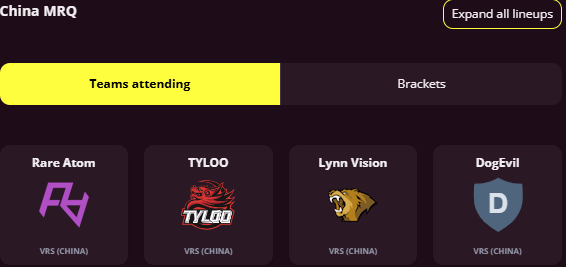
The Asia-Pacific Qualifier featured a four-slot allocation distributed across three distinct sub-regions, with China afforded two berths due to RA’s regional ranking. In China, TYLOO prevailed over RA, while LVG also secured advancement. In other sub-regions, FlyQuest’s victory in Oceania/Southeast Asia and Chinggis Warriors’ success in Mongolia & West Asia underscored the region’s increasing competitive diversity. The structure of this qualifier facilitated broader regional recognition and the emergence of new contenders on the global stage.
Conclusion
The CSGO Major 2025 Qualifiers exemplified a nuanced balance between continuous, results-driven selection and the competitive volatility inherent in elimination formats. Valve’s direct invitation policy reinforced the importance of organizational stability and long-term performance, while the MRQs provided a platform for resilience and adaptability to translate into meaningful opportunity. The resultant lineup, combining traditional powerhouses with several ascendant teams, sets the stage for a highly compelling Major, promising a rich competitive narrative and further global integration within professional Counter-Strike.
CSGO Major 2025 Qualifiers — Frequently Asked Questions
Q1: Which Mongolian team advanced from the Asia-Pacific MRQ?
Q2: What role did Valve Regional Standings play in the qualifiers?
Q3: Which regions showed the most growth during the CSGO Major 2025 Qualifiers?
Q4: How many teams in total advance to the BLAST.tv Austin Major?
Q5: Why are the CSGO Major 2025 Qualifiers important?
About the Author


