

When Valve brought back the Steam Machine in 2025, most players focused on its compact design, improved performance, and Android support. However, the real impact of this device could reach far beyond living rooms. The Steam Machine has the potential to reshape how developers build and distribute games, especially now that PC gaming influences nearly every part of the global industry (Valve Steam Machine 2025).
Although gaming hardware always affects development in some way, the Steam Machine arrives during a unique moment. Linux gaming support is better than ever, Proton is mature, and developers can now reach millions of SteamOS users without rewriting their entire engine. Furthermore, the device encourages studios to treat PC gaming more like a stable platform rather than an unpredictable hardware jungle. Meanwhile, support for Android apps expands opportunities for mobile studios wanting to enter the PC scene.
In other words, the Steam Machine 2025 carries a ripple effect that could shift the direction of game development worldwide — and Australia, with its strong indie community, may benefit the most.
A More Predictable PC Platform for Developers : Valve Steam Machine 2025
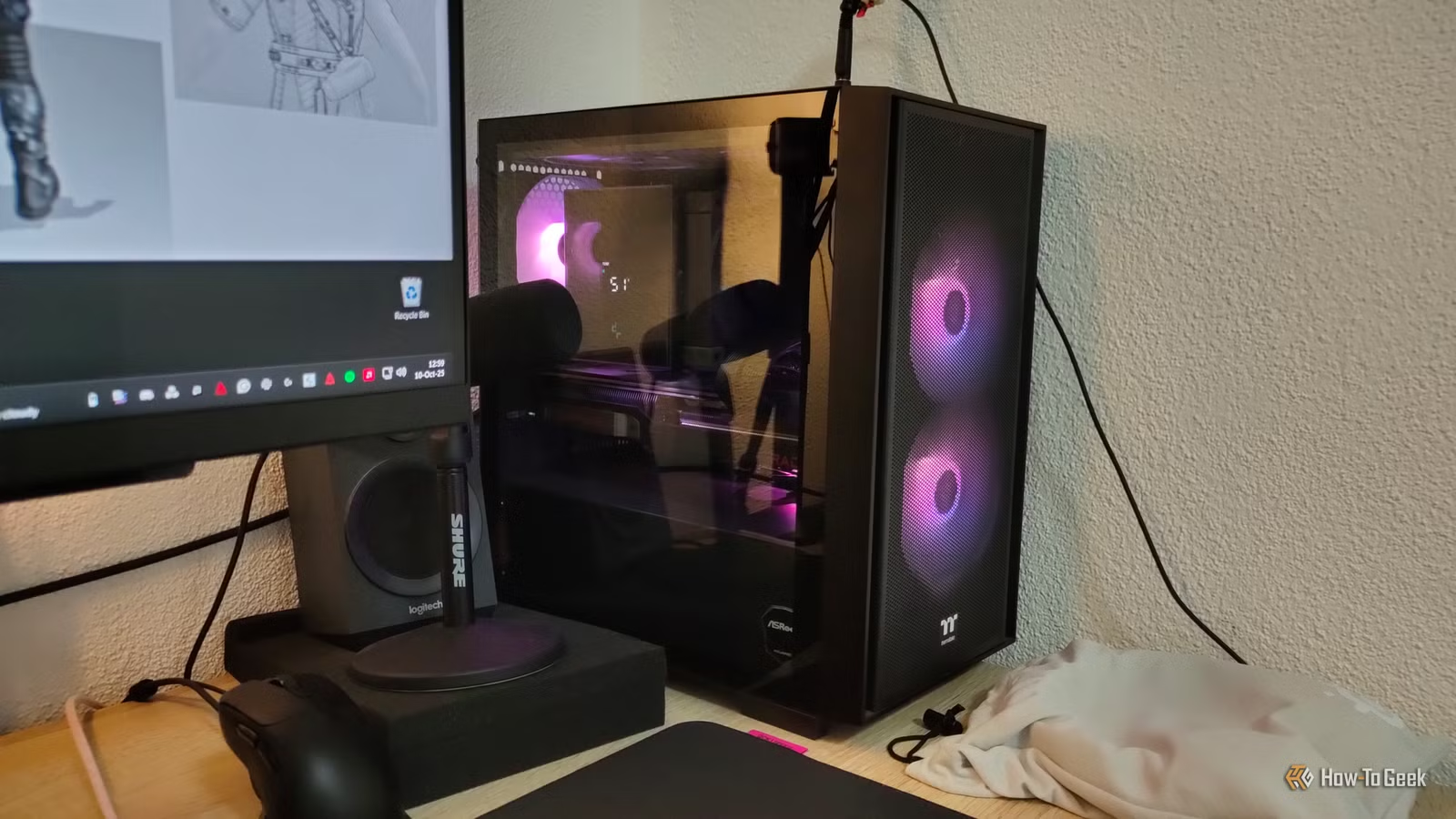
PC gaming has always been powerful but unpredictable. Developers must account for different CPUs, GPUs, RAM configurations, and countless software variations. However, the Steam Machine simplifies this landscape. It offers a consistent hardware base that developers can optimise for.
Furthermore, SteamOS, streamlines performance by removing unnecessary background tasks. This consistency reduces the testing burden on studios. Aussie indie teams, already working with tight budgets and smaller staff, will find this stability extremely helpful. Meanwhile, mid-sized studios can treat the Steam Machine like a console target, which speeds up optimisation.
This predictability doesn’t eliminate PC variety, but it reduces the chaos.
Proton and SteamOS Push Developers Toward Better Cross-Platform Support – Valve Steam Machine 2025



Valve spent years improving Proton so Windows games could run smoothly on Linux. Now that Proton is reliable, developers have clear motivation to optimise their titles for Linux-based systems.
Furthermore, supporting Linux opens doors to other devices powered by similar environments, including handheld PCs and future Steam hardware. This creates a “write once, deploy everywhere” opportunity. Aussie studios, which often target several platforms at once, can now streamline development. Meanwhile, players gain smoother performance as developers invest more time into Linux testing.
In other words, Proton becomes a silent force that shapes future design decisions.
Android Support Attracts a New Wave of Developers (Valve Steam Machine 2025)



The Verge reported that Android app support is coming to SteamOS. This feature brings mobile developers into the Steam ecosystem. Many Australian indie studios began their journey with mobile games because development costs were low. The Steam Machine now gives these teams a new platform to release hybrid games without reinventing everything.
Furthermore, developers can expand their audiences by offering PC-enhanced versions of mobile titles. Meanwhile, Steam’s recommendation system exposes these games to millions of players. This creates a flow of opportunity that traditional consoles rarely provide.
How the Steam Machine Changes Developer Priorities
| Development Area | Impact of Steam Machine 2025 | Result for Aussie Studios |
|---|---|---|
| Linux Optimisation | More demand for Proton-ready builds | Easier cross-platform support |
| UI / UX Design | More lounge-room usage | Better controller support |
| Performance Tuning | Consistent hardware target | Faster optimisation |
| Game Distribution | PC + Android support | Larger audience reach |
| Modding Tools | Supported by default | More creative communities |
Living-Room PC Gaming Encourages Console-Style Design



Because the Steam Machine aims for the living room, developers now need to consider controller-friendly UI layouts. Aussie studios making couch-friendly games gain a natural advantage. Meanwhile, PC developers with keyboard-focused interfaces may rethink future titles to appeal to both desk and couch players.
Furthermore, the Steam Machine provides incentive to include split-screen, shared-screen co-op, and local multiplayer again — features that faded during the online gaming boom. This revival benefits Australian households that still enjoy social gaming on big TVs.
Modding Becomes Even More Important

Valve supports modding culture more than any other major platform holder. Steam Workshop tools remain powerful, and the Steam Machine embraces modding without limits. This openness encourages developers to build mod-friendly architecture. Furthermore, modding communities help extend a game’s lifespan, which benefits both players and developers.
Aussie players, who enjoy community-driven content, will appreciate this freedom. Meanwhile, Australian developers can leverage modding to gather feedback, expand replay value, and grow their audience organically.
Publishing Becomes Easier for Indie Teams

Steam has always been more accessible than console certification pipelines. The Steam Machine strengthens this advantage because it behaves like a console while avoiding console bureaucracy. Developers avoid lengthy approval processes, expensive dev kits, and platform restrictions.
Furthermore, Steam’s early access tools, analytics dashboards, and global distribution system allow studios to publish quickly and refine based on player response. This benefits Australian developers, who often build games with small teams and tight deadlines.
The Steam Machine 2025 offers more than a compact gaming box for Australian lounge rooms. It represents a strategic shift in how developers, both large and small, approach game creation. By offering predictable hardware, Android app support, open modding, and strong Linux compatibility, Valve is creating a more flexible development ecosystem.
This device may push studios to rethink how they design interfaces, optimise performance, and reach players across multiple platforms. Furthermore, its influence will stretch far beyond hardware sales, shaping game distribution, indie development, and the future of PC gaming worldwide.
If Valve continues strengthening the platform, the Steam Machine 2025 may become one of the most important developer-friendly devices of the decade.
FAQ Section
About the Author


